

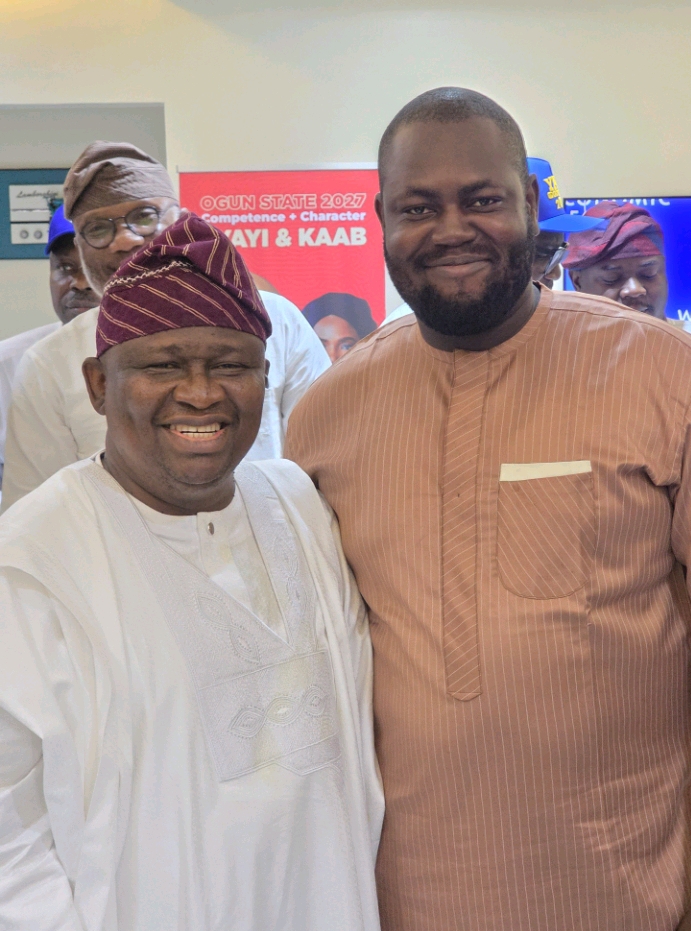
The monumental contributions of Senator Solomon Olamilekan Adeola, popularly known as YAYI, to the political landscape of Ogun State have continued to reinforce his stature as a formidable strategist, an accomplished public servant, and a political phenomenon whose influence transcends conventional partisan calculations. His engagements, developmental interventions, political investments, and expanding grassroots networks have contributed significantly to the consolidation of progressive politics across the state.
YAYI’s political relevance is not merely a product of rhetoric or speculative projections; it is sustained by his expanding political architecture, strategic alliances, and the confidence he continues to inspire among a broad spectrum of stakeholders. Indeed, his emergence as a major force in Ogun’s political equation underscores the timeless principle that political greatness is established not by noise, but by demonstrable capacity, strategic foresight, and an enduring connection with the people.
The omission of Ladi Adebutu’s name from the relevant party register may well have spared him what could have become the most devastating electoral defeat of his political career. Given the prevailing political realignments, the expanding influence of Senator Solomon Olamilekan Adeola (YAYI), and the growing momentum behind his political aspiration, the 2027 governorship contest could have presented Adebutu with an extraordinarily formidable challenge.
In the estimation of many political observers, the administrative controversy surrounding his candidacy may have inadvertently shielded him from a humiliating electoral verdict that could have irreparably diminished his political standing. Indeed, the unfolding circumstances underscore a compelling political reality: sometimes, what appears to be a procedural setback may equally prevent an ambitious politician from confronting the full weight of an unfavourable electoral tide.
Across Ogun State, YAYI is increasingly regarded by his supporters as a political enigma whose strategic dexterity, institutional experience, and formidable mobilisation capacity position him as a consequential figure in the unfolding struggle for the state’s future leadership.
His appeal lies not only in the breadth of his political network but also in the expectations of those who believe his experience can be translated into purposeful governance, inclusive development, economic opportunity, and renewed public confidence. While the final verdict belongs to the electorate, the enthusiasm surrounding his political project demonstrates that he has become a serious force in the state’s political discourse.

