

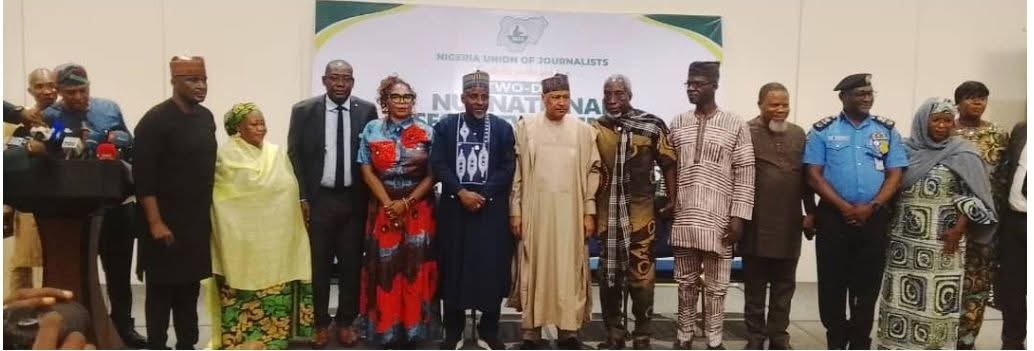
The Nigeria Union of Journalists (NUJ) has called on state governments across the country to strengthen funding and institutional support for state-owned media organisations as part of efforts to enhance professionalism, efficiency, and national development.
The call was contained in a communiqué issued at the end of the two-day National Security Summit organised by the NUJ in collaboration with the Department of State Services (DSS) in Abuja. The summit, held from June 18 to 19, 2026, focused on the theme, “Media and Security Agencies as Partners in Nation Building.”
Participants at the summit observed that the media remains a critical stakeholder in shaping public discourse, promoting accountability, countering misinformation, and supporting national stability. They stressed that state-owned media organisations require improved funding and institutional backing to effectively discharge their responsibilities while maintaining ethical standards and editorial independence.
The summit brought together media executives, journalists, heads of security and intelligence agencies, government officials, academics, civil society organisations, women groups, and development partners to deliberate on the relationship between the media and security institutions in addressing Nigeria’s security challenges.
Among its key resolutions, the summit urged security agencies to adopt transparent and proactive communication strategies, while media organisations were encouraged to strengthen fact-checking mechanisms and uphold professionalism in security-related reporting. Participants also advocated regular engagement between the media and security agencies to foster trust and improve information sharing.
The communiqué further recommended increased government investment in education, youth empowerment, and social protection programmes to address the root causes of insecurity. It also called for greater inclusion of women in peacebuilding and security governance, formalisation of community-based security systems, and intensified campaigns against drug abuse and illicit trafficking.
The summit noted that Nigeria continues to face complex security challenges, including terrorism, banditry, kidnapping, cybercrime, misinformation, and communal conflicts. Participants maintained that sustainable security can only be achieved through a whole-of-society approach involving government, security agencies, the media, and citizens.
In conclusion, the summit reaffirmed that national security is a shared responsibility and emphasised that peace, stability, and development can only be sustained through partnerships built on trust, transparency, accountability, and commitment to the national interest.

