

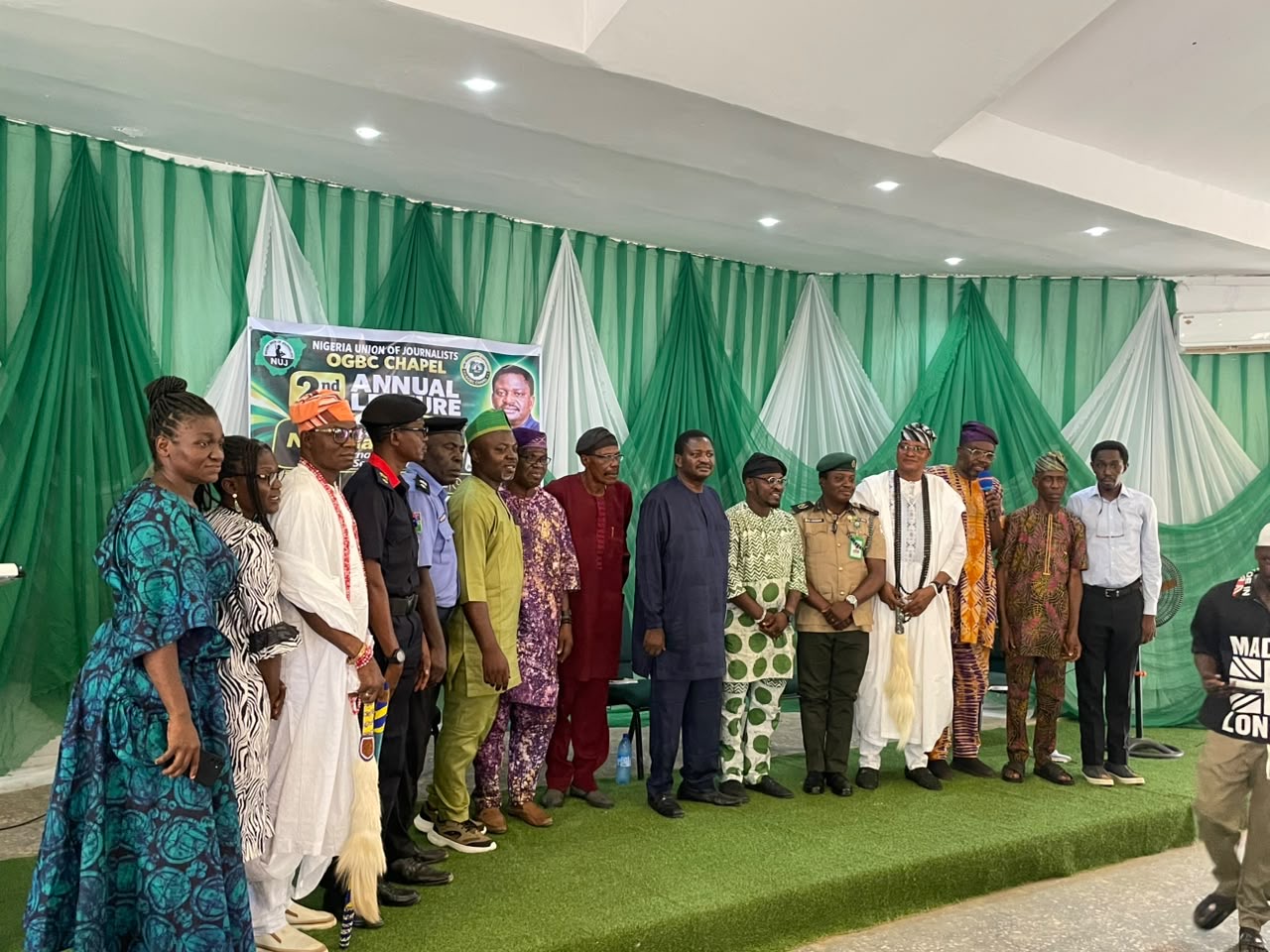
Former Presidential Spokesperson, Mr Femi Adesina, has warned Nigerian journalists against giving terrorists and purveyors of ethnic and religious hatred undue publicity, saying irresponsible media coverage could embolden insecurity and undermine national development.
Adesina gave the warning while delivering the keynote lecture at the second annual lecture of the Ogun State Broadcasting Corporation (OGBC) Chapel of the Nigeria Union of Journalists (NUJ), held at Iwe Iroyin Press Centre, Abeokuta, Ogun State.
Speaking on the theme, “Media, Conflict and National Security: The Journalist’s Role in a Changing Security Landscape,” the former Special Adviser to President Muhammadu Buhari on Media and Publicity said journalists must be conscious of the power of their platforms and ensure their reports do not promote fear, hatred or violence.
He urged media organisations to stop amplifying the activities of terrorists at the expense of the sacrifices and achievements of security personnel, stressing that the media should give greater attention to the heroism of officers and men of the Nigerian Armed Forces.
Adesina cited the 1994 Rwandan genocide as an example of how media platforms could be used to incite violence and deepen divisions, warning that journalists must never become instruments for spreading hate speech and disinformation.
He also called for balanced and responsible journalism, urging practitioners to resist sensational headlines, clickbait and the presentation of opinions as facts.
The former presidential spokesman, however, clarified that promoting positive narratives should not mean abandoning the media’s watchdog responsibility or turning journalists into government propagandists.
He maintained that the media must acknowledge the country’s challenges while highlighting areas of progress, noting that constructive criticism should be directed towards building stronger institutions and a better nation.
Adesina further urged journalists to uphold the ethics of the profession, emphasising that while opinions are free, facts must remain sacred.
The lecture attracted veteran journalists, media practitioners, security personnel, political leaders, traditional rulers and students, with activities including a panel discussion, goodwill messages and an interactive question-and-answer session.

